If you’re tired of commercial products that don’t deliver, or if you’re looking for a sustainable alternative, making your own moisturizer might be the perfect solution. Let’s explore the world of homemade moisturizer for dry skin and find the perfect recipe for your skincare routine.
Dry skin is a challenge many of us face, especially during colder months or in dry climates. For years, I tried countless store-bought moisturizers, only to be disappointed by their results or irritated by their hidden chemicals.
That’s when I discovered the joy of crafting my own moisturizers at home. Not only are they effective, but they’re also free of harsh additives, customizable to my needs, and much more affordable.
Why Choose a Homemade Moisturizer?
The Benefits of Homemade Products
One of the biggest advantages of homemade moisturizers is that they’re free from synthetic chemicals, fragrances, and preservatives often found in commercial products.
Many of these additives can irritate sensitive skin or exacerbate dryness. With homemade alternatives, you have full control over what goes on your skin, ensuring only natural and nourishing ingredients are included.
Homemade products are also eco-friendly.
By using simple, natural ingredients, you reduce plastic waste from packaging and avoid contributing to the environmental impact of mass production. According to Treehugger, choosing natural skincare is an excellent way to embrace a more sustainable lifestyle.
Addressing Dry Skin with Natural Ingredients
Dry skin often needs deeper hydration and gentler care. Natural ingredients like shea butter and aloe vera not only moisturize but also soothe irritation and restore the skin’s natural barrier.
Compared to store-bought alternatives, my homemade moisturizer for dry skin provide more targeted and long-lasting hydration, making them ideal for tackling persistent dryness.
Key Ingredients for a Homemade Moisturizer for Dry Skin
Shea Butter
Shea butter is a powerhouse ingredient for dry skin. Packed with vitamins A and E, it deeply moisturizes, soothes inflammation, and promotes skin healing. I often use shea butter as a base for my whipped body butters or as a standalone moisturizer for extra-dry areas like elbows and knees.
Coconut Oil
Coconut oil is another staple in my homemade skincare arsenal. Known for its ability to lock in moisture, it creates a protective barrier on the skin’s surface. The B Guide highlights coconut oil as a versatile ingredient that’s easy to incorporate into DIY recipes.
Aloe Vera
Aloe vera gel is perfect for soothing dry, irritated skin. Its lightweight texture makes it a great addition to lotions and day creams, especially for those with sensitive skin. I love using fresh aloe vera gel for its cooling and hydrating properties.
Beeswax or Plant-Based Waxes
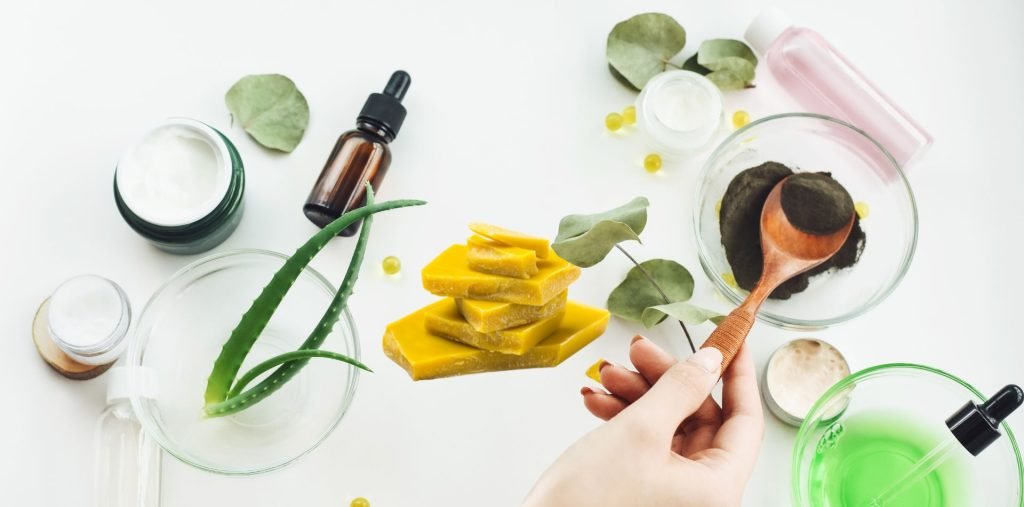
Beeswax is a fantastic ingredient for thickening creams and creating a protective seal to lock in moisture. For a vegan option, plant-based alternatives like candelilla wax work just as well.
Essential Oils (e.g., Lavender, Rose, Chamomile)
Essential oils not only add a natural fragrance to your moisturizer but also bring therapeutic benefits. Lavender oil calms the skin, rose oil hydrates, and chamomile oil soothes irritation. Always dilute essential oils properly before use.
Carrier Oils (e.g., Almond Oil, Jojoba Oil)
Carrier oils are lightweight and nutrient-rich, making them ideal for blending into moisturizers. Almond oil nourishes and softens the skin, while jojoba oil mimics the skin’s natural sebum, balancing hydration without clogging pores.
Easy Recipes for Homemade Moisturizer for Dry Skin
Ultra-Hydrating Whipped Body Butter
Ingredients:
- 1 cup shea butter
- ½ cup coconut oil
- ¼ cup almond oil
Instructions:
- Melt the shea butter and coconut oil in a double boiler.
- Remove from heat and stir in almond oil.
- Let the mixture cool slightly, then whip with a hand mixer until fluffy.
- Store in an airtight container and use as needed.
Soothing Aloe Vera Lotion
Ingredients:
- ½ cup aloe vera gel
- ¼ cup jojoba oil
- 5 drops lavender essential oil
Instructions:
- Blend aloe vera gel and jojoba oil in a bowl.
- Add lavender essential oil and mix well.
- Pour into a pump bottle for easy use.
Beeswax Balm for Extreme Dryness
Ingredients:
- 1 tbsp beeswax
- ¼ cup coconut oil
- 1 tbsp rosehip oil
Instructions:
- Melt the beeswax and coconut oil together.
- Stir in rosehip oil and pour into tins.
- Allow to set before using.
Lightweight Day Cream
Ingredients:
- ¼ cup aloe vera gel
- 2 tbsp argan oil
- 3 drops chamomile essential oil
Instructions:
- Combine all ingredients in a bowl.
- Blend until smooth and store in a glass jar.
Customizing Your Moisturizer
Adjusting for Skin Types
For oily skin, reduce the amount of heavy oils and incorporate lighter options like jojoba or grapeseed oil. Sensitive skin benefits from soothing ingredients like chamomile essential oil and aloe vera.
Seasonal Tweaks
In winter, opt for richer formulations with shea butter and beeswax. For summer, switch to lightweight options featuring aloe vera and argan oil.
Adding Extra Boosters
Enhance your moisturizer with vitamin E oil for added antioxidant protection or hyaluronic acid for extra hydration.
Benefits Beyond Dry Skin
homemade moisturizer for dry skin offer more than just hydration.
They improve overall skin texture, reduce irritation, and provide a natural glow. Additionally, creating your own skincare products reduces packaging waste and supports a more sustainable lifestyle. Craftovator emphasizes the environmental benefits of DIY skincare.
Common Mistakes to Avoid
- Overcomplicating Recipes: Stick to simple, effective formulations to avoid overwhelming your skin.
- Using the Wrong Ratios: Balance moisturizing and sealing ingredients to prevent greasy or ineffective products.
- Skipping Patch Tests: Always test new formulations on a small area to check for allergic reactions.
Conclusion
Crafting your own homemade moisturizer for dry skin is an empowering and rewarding journey. By using natural, nourishing ingredients, you can create products that cater specifically to your skin’s needs.
Start with simple recipes, experiment with different combinations, and enjoy the satisfaction of knowing exactly what’s in your skincare. Not only will your skin thank you, but so will the planet.